RCWeb Bomberman Arena
Bomberman Arena is a shared-screen maze battle for RCWeb. One browser becomes the full arena display, while every phone becomes a live controller for its own bomber. Players weave through walls and crates, plant bombs, uncover upgrades, and try to be the last player standing.

Features
- A shared maze with destructible crates and chain-reacting bombs.
- Phone direction pads and a large bomb button.
- Bomb-capacity and speed upgrades.
- Automatic rounds with a running wins scoreboard.
The game
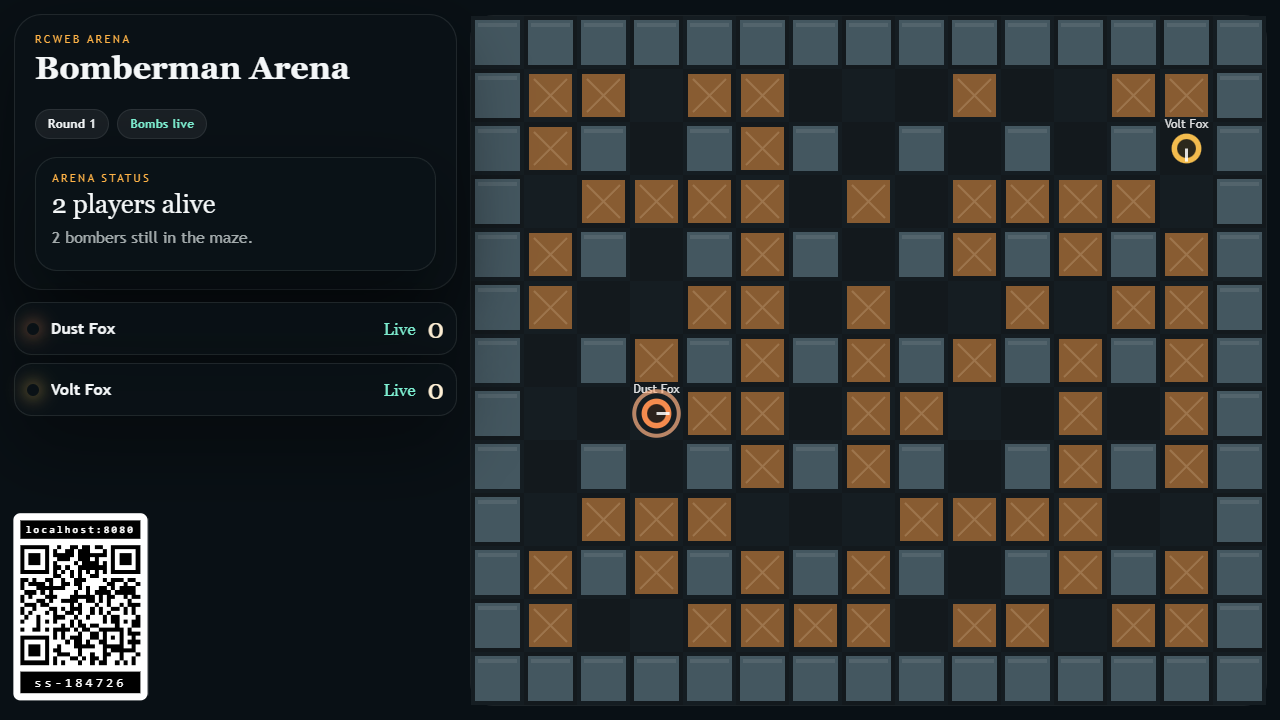
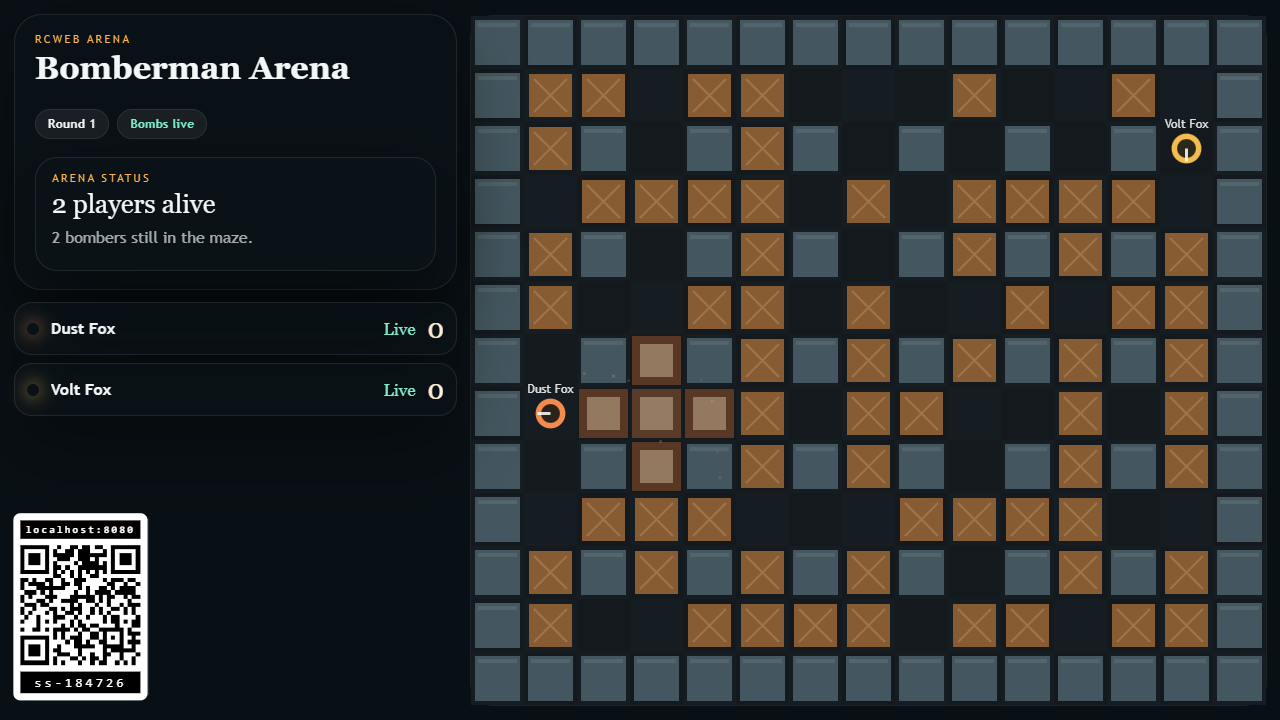
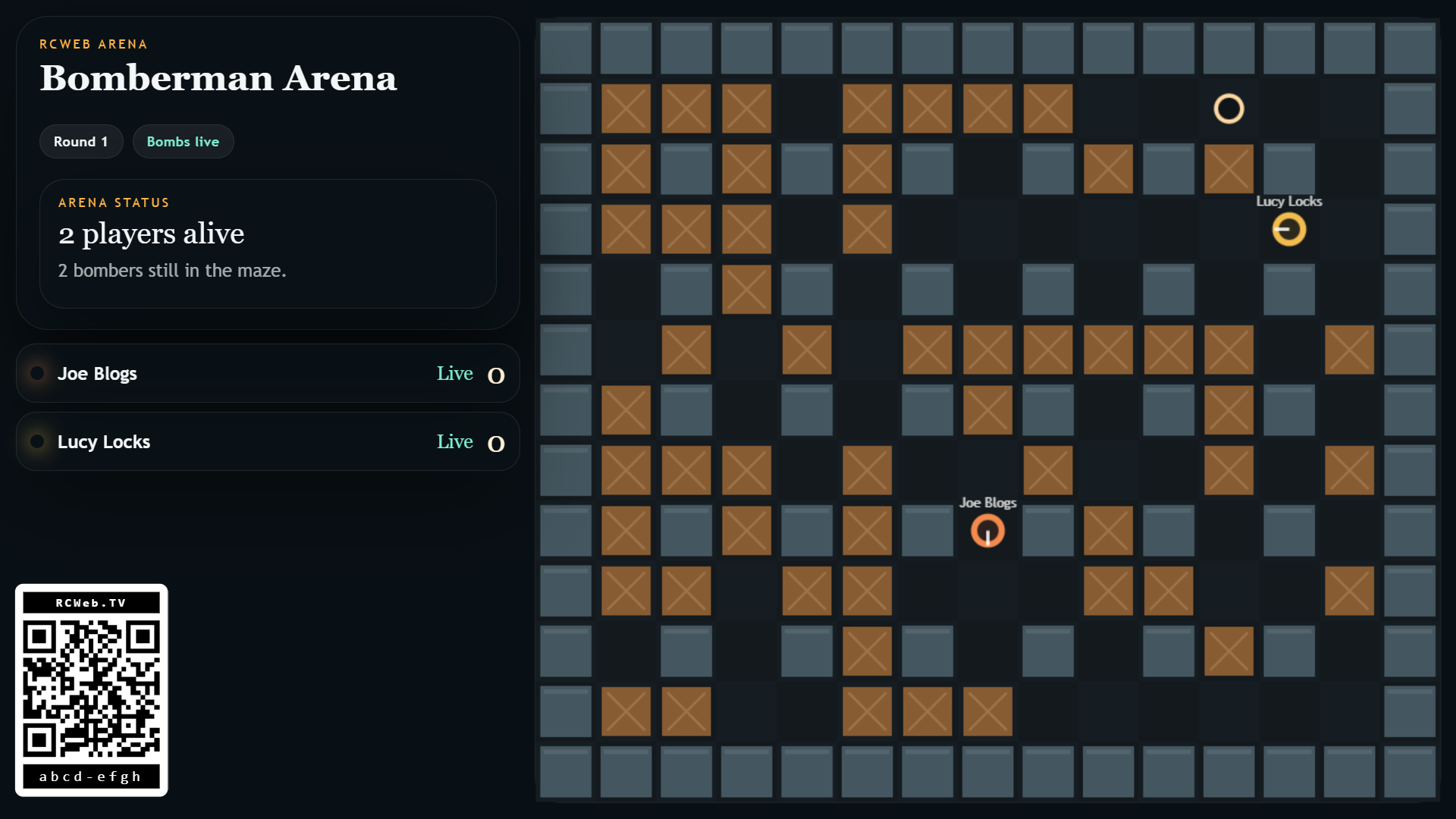
Bomberman Arena turns the familiar bomb-maze formula into a lively room game. The shared screen shows the whole field: solid walls, breakable crates, live bombs, blast flames, powerups, round countdowns, and the scoreboard. Phones handle the private player-side interaction: movement and bomb placement.
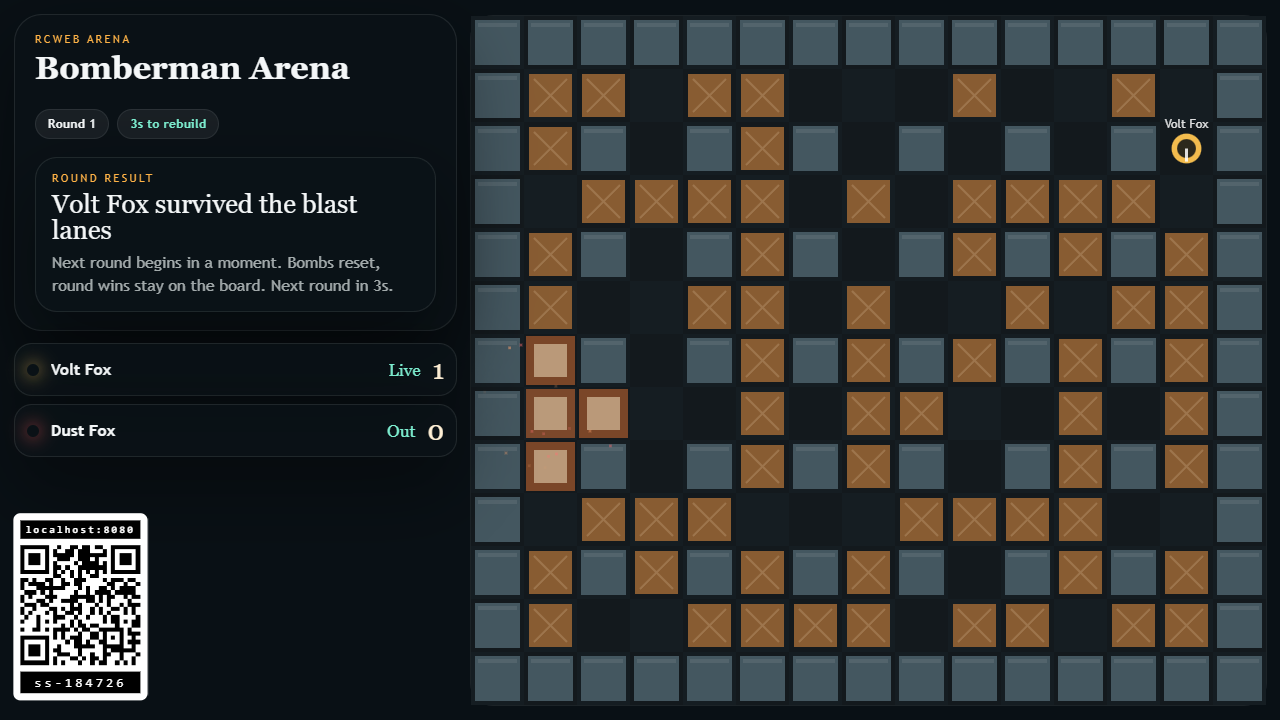
The arena is built around round-based survival. Living players move through the maze, break crates, and uncover powerups that can increase bomb capacity or movement speed. The last living bomber wins the round, keeps the win on the board, and the maze resets for the next one.
Getting eliminated takes you out until the next round.
How to play
Open /bomberman/ on the shared screen. Players scan the QR code to open /bomberman-c/ on their phones in the same room. As soon as players are connected, the arena can begin and rebuild itself round after round automatically.
Use the direction pad on your phone to move through the maze. While alive, the action button places a bomb. Bombs explode after a short fuse, sending flames outward in straight lines until they hit a wall or run out of range.
Blow up crates to open paths and reveal powerups. Bomb upgrades increase how many bombs you can have active at once, and speed upgrades let you move more aggressively through the maze.
If a blast catches you, you are out for the rest of the round. When only one living player remains, the round ends, the winner gets the win, and the arena resets for the next round.
Starting over
The Reset button on a controller rebuilds the arena and clears the round wins and upgrades for everyone. Ordinary round changes keep the wins and upgrades you have earned. You can also join alone to practise movement and bomb timing.
Screenshots